


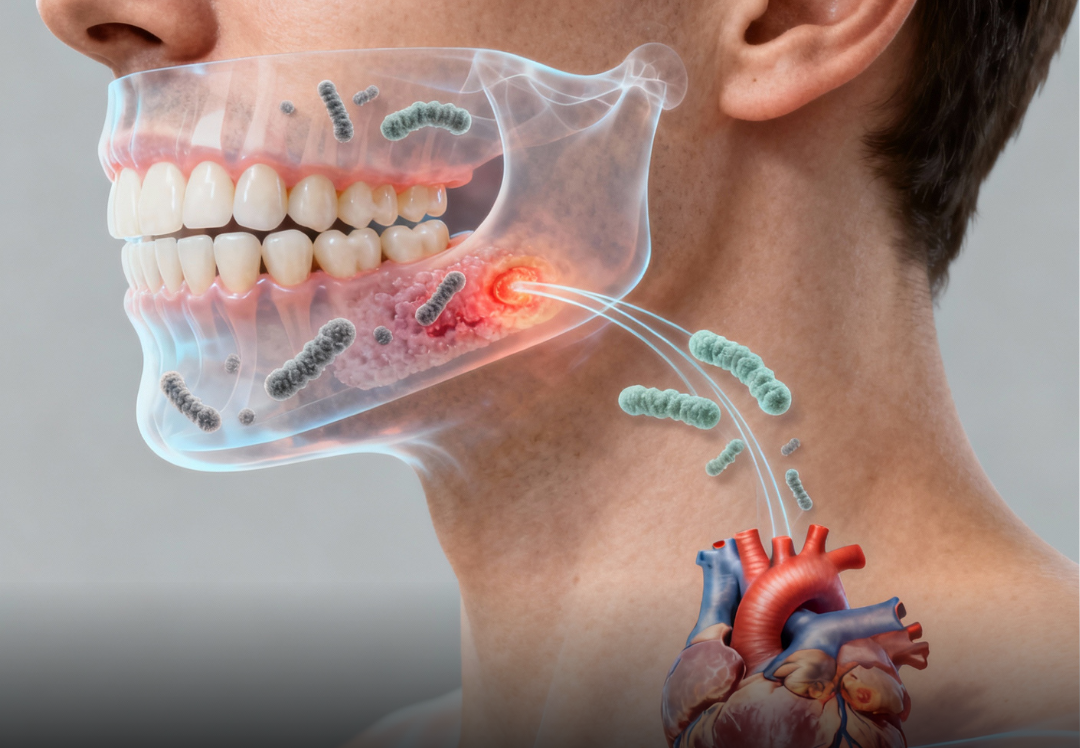
The earliest signs of cardiovascular stress rarely begin with dramatic symptoms. More often, they appear quietly in the mouth — irritated gums, unusual bleeding, or rapid buildup of tartar. These are early inflammatory signals the body sends long before the heart begins to struggle.
During routine dental check-ups, dentists often notice patterns that reflect systemic inflammation. Subtle changes in gum structure, pocket depth, and tissue response can mirror the same biological processes that later lead to blood vessel damage and arterial plaque formation. This is early biology happening in real time.
Scientific research shows that oral bacteria and chronic gum inflammation can affect blood vessel function. When inflammation becomes persistent, the risk of atherosclerosis increases — turning gum disease into an important indicator of cardiovascular risk, not merely a dental concern.
That is why oral health is far more than just “clean teeth.” It is a fundamental part of caring for the body as a whole. Regular dental visits do more than prevent cavities — they may help protect the heart long before symptoms appear elsewhere.
🔹 This post is for educational purposes only and does not replace professional medical advice.