

When a tooth is missing, the bone beneath it gradually begins to deteriorate. This process occurs because the jawbone stays strong only when it is stimulated. The natural root of a tooth provides this stimulation through the pressure generated during chewing. Once the root is gone, the body interprets the area as unused and begins to resorb the bone.
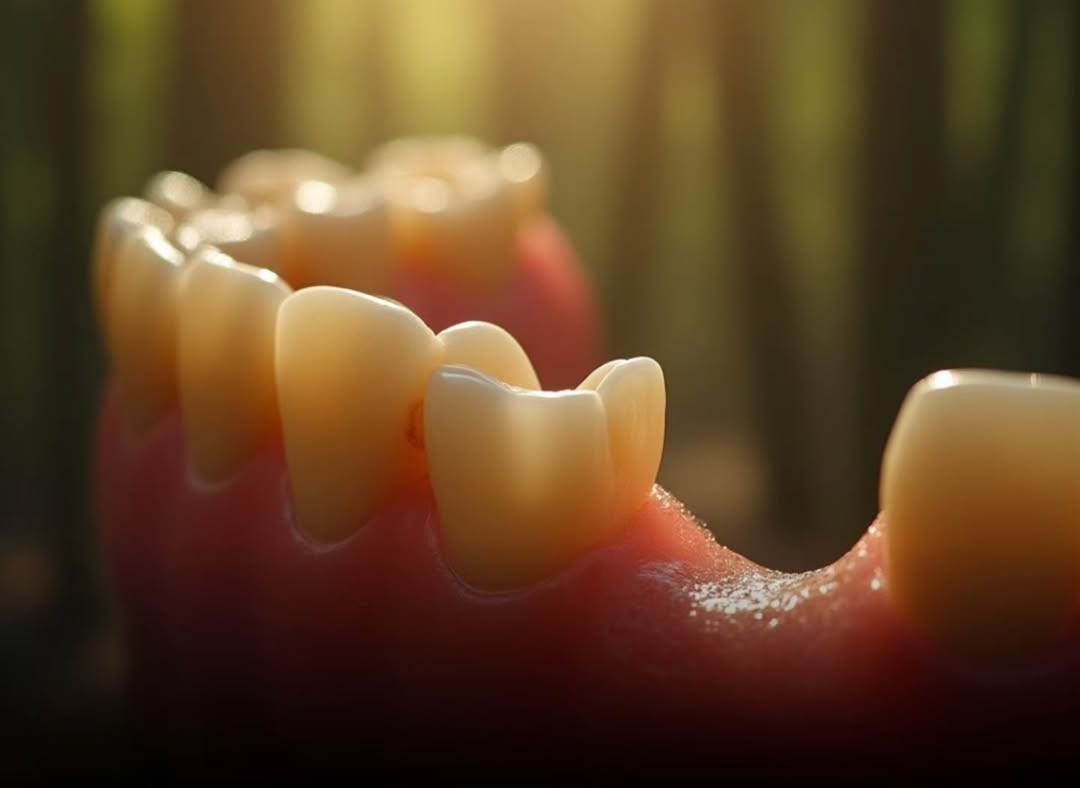
Over time, the empty space changes shape. The gums sink inward, neighboring teeth begin to tilt toward the gap, and the tooth opposite the missing one may elongate as it attempts to make contact with the absent partner.
What initially seemed like a simple tooth replacement gradually becomes a more complex issue. Reduced bone volume makes it harder to place an implant. Limited space compromises the fit of a dental bridge or denture. An uneven bite can place stress on remaining teeth and lead to further dental complications.
How Quickly Does Bone Loss Occur?
Bone resorption begins within months of losing a tooth. The longer the space is left empty, the more severe the bone and gum changes can become. In advanced cases, patients may require bone grafts, orthodontic correction, or multiple restorative procedures before an implant can be successfully placed.
The Importance of Early Tooth Replacement
Replacing a missing tooth early — whether through a dental implant, a bridge, or a graft performed at the time of extraction — helps preserve bone structure, maintain facial contours, and support long-term oral health.
Taking action promptly reduces the need for complex interventions later and protects the integrity of your bite, your smile, and your overall dental function.
At Ledismile Dental Clinic, we specialize in implantology and full-mouth rehabilitation. Our expert team evaluates each patient individually to determine the most effective and minimally invasive treatment approach.
A Missing Tooth Is More Than a Gap
A single missing tooth can initiate bone loss, misalignment, and long-term functional problems in the jaw. Early intervention is the key to preventing these complications and maintaining a healthy, stable smile.
This article is for educational purposes only and does not replace professional dental consultation.