

ENGLISH VERSION — WordPress SEO HTML
“`html
Sleeping with Your Mouth Open? Your Teeth and Gums May Be Paying the Price
Do you often wake up with a dry mouth, bad breath, or an irritated throat?
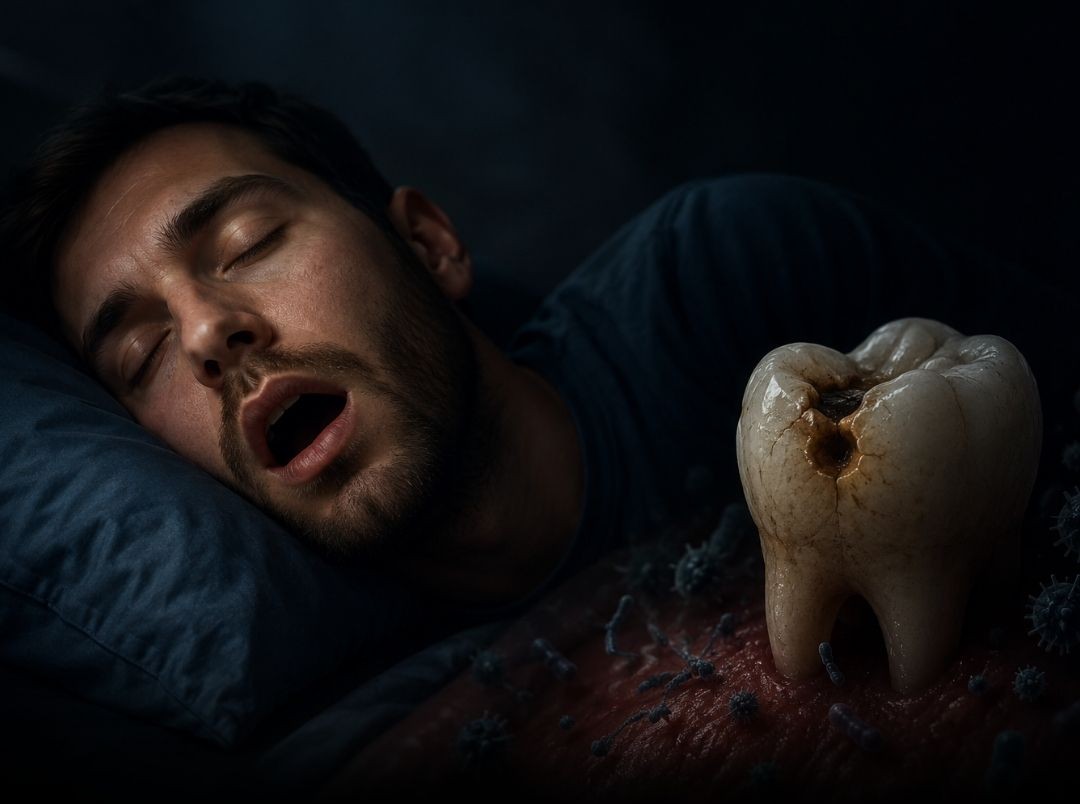
You may be breathing through your mouth during sleep without even realizing it. Although it may seem like a harmless habit, sleeping with your mouth open can have a significant impact on your oral health over time.
When the mouth stays open for hours during the night, saliva evaporates more quickly. This creates a dry environment where bacteria can multiply more easily, increasing the risk of dental and gum problems.
Why Saliva Is So Important for Oral Health
Saliva is not just moisture. It is one of the body’s most important natural defense systems for the mouth.
Saliva helps to:
- remove bacteria and food particles from the mouth
- neutralize acids that can damage tooth enamel
- protect and remineralize teeth
- maintain the natural balance of the oral microbiome
- keep the gums and soft tissues hydrated
When saliva levels decrease during the night, the mouth loses part of its natural protection. This allows bacteria and acids to act more aggressively on the teeth and gums.
What Happens When Your Mouth Dries Out at Night?
Nighttime mouth breathing can lead to chronic dryness of the mouth, also known as dry mouth or xerostomia. This condition may cause more than just discomfort.
Over time, dry mouth during sleep may increase the risk of:
- bad breath in the morning
- dryness of the mouth and throat
- a sticky feeling in the mouth after waking up
- increased plaque buildup
- tooth decay and cavities
- gum irritation and inflammation
- tooth sensitivity
- changes in the natural bacterial balance of the mouth
This is why waking up with a dry mouth should not be ignored, especially if it happens frequently.
Bad Breath in the Morning: Could Mouth Breathing Be the Cause?
Morning bad breath is often linked to reduced saliva flow during sleep. When the mouth is open, dryness becomes even more intense.
Without enough saliva, bacteria remain more active and release unpleasant-smelling compounds. This can make bad breath stronger and more persistent, even in people who brush their teeth regularly.
Can Mouth Breathing Affect the Gums?
Yes. The gums also need a hydrated and balanced oral environment to stay healthy.
When the mouth becomes dry, the soft tissues can become more irritated and sensitive. In some cases, chronic dryness may contribute to gum inflammation, bleeding, discomfort, or worsening of existing periodontal problems.
If you already have gum sensitivity, gingivitis, or periodontitis, nighttime mouth breathing may make the condition more difficult to control.
Why Do Some People Sleep with Their Mouth Open?
Mouth breathing during sleep can happen for different reasons. Some of the most common include:
- blocked nose
- allergies
- sinus problems
- deviated septum
- enlarged tonsils or adenoids
- snoring
- sleep disorders
- habitual mouth breathing
Because the cause may not always be dental, it is important to evaluate the problem properly. In some cases, a dentist may recommend collaboration with an ENT specialist or sleep specialist.
Signs You Should Not Ignore
You may be breathing through your mouth at night if you often notice:
- dry mouth when you wake up
- bad breath in the morning
- dry or irritated throat
- cracked lips
- increased thirst during the night
- sticky saliva
- more plaque than usual
- tooth sensitivity
- gum irritation
If these signs appear regularly, it may be time to check your oral health and understand what is causing the dryness.
How Can a Dentist Help?
A dental check-up can help identify whether dry mouth is affecting your teeth, gums, enamel, or oral microbiome.
At Ledismile, our team evaluates:
- the condition of the gums
- plaque and tartar buildup
- signs of enamel damage
- tooth sensitivity
- risk of cavities
- signs of inflammation or periodontal disease
- possible habits that may be affecting your oral health
The goal is not only to treat visible problems, but also to understand the habits and hidden causes that may be damaging your smile over time.
Simple Tips to Protect Your Mouth
If you often wake up with a dry mouth, these steps may help:
- drink enough water during the day
- maintain excellent oral hygiene before sleep
- avoid smoking
- limit alcohol before bedtime
- use a humidifier if the air in your room is dry
- treat nasal congestion or allergies properly
- schedule regular dental check-ups
However, if mouth breathing is frequent, it is important to identify the real cause rather than only treating the symptoms.
Oral Health Is More Than a Beautiful Smile
At Ledismile, we believe oral health is not only about aesthetics. It is also about daily habits, prevention, comfort, and overall well-being.
Sleeping with your mouth open may seem like a small detail, but over time it can affect your teeth, gums, breath, and oral balance.
If you wake up often with a dry mouth, bad breath, or throat irritation, nighttime mouth breathing may be the hidden cause.
Book Your Dental Check-Up at Ledismile
Do not ignore the signs your body gives you.
At Ledismile, we help you understand what is happening in your mouth and create a personalized plan to protect your smile, your gums, and your long-term oral health.
Ledismile — because a healthy smile starts with prevention.
Frequently Asked Questions
Is sleeping with an open mouth bad for teeth?
Yes, it can be. Sleeping with the mouth open may cause dryness, reduce saliva protection, and increase the risk of plaque buildup, cavities, bad breath, and gum irritation.
Why do I wake up with a dry mouth?
Dry mouth in the morning may be caused by mouth breathing, nasal congestion, allergies, snoring, certain medications, dehydration, or sleep-related breathing issues.
Can dry mouth cause bad breath?
Yes. Saliva helps wash away bacteria. When the mouth is dry, bacteria can multiply more easily and produce unpleasant odors.
Should I see a dentist for dry mouth?
If dry mouth happens frequently, a dental check-up is recommended. A dentist can evaluate whether dryness is affecting your teeth, gums, enamel, or overall oral health.
“`