


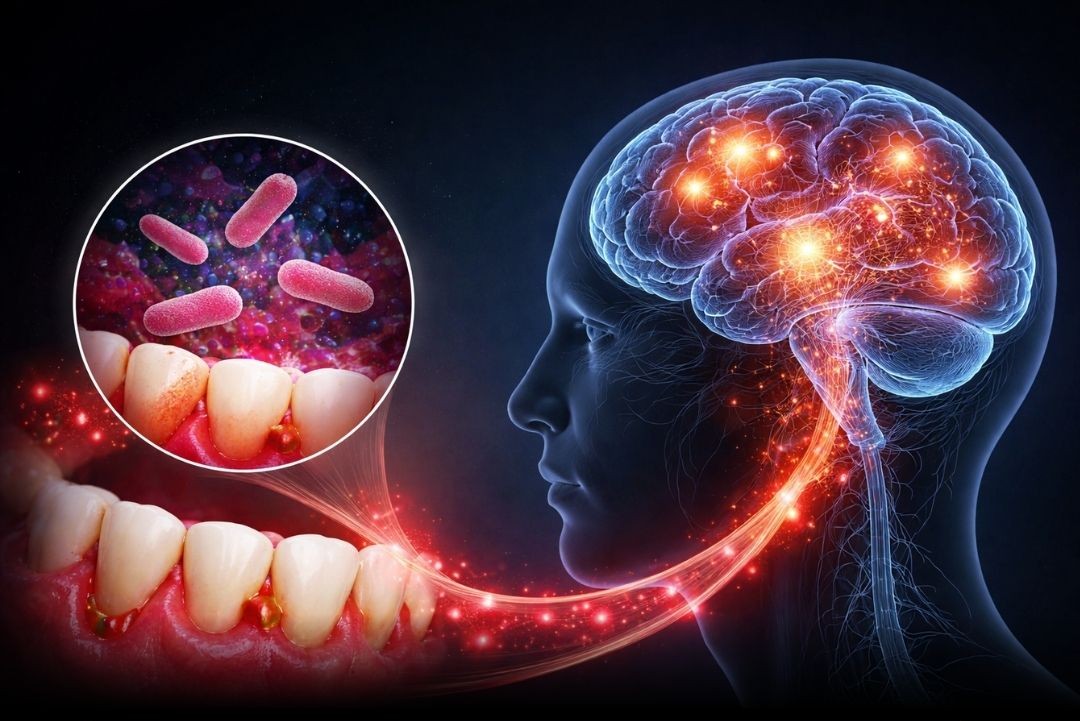
Can Gum Bacteria Be Linked to Alzheimer’s Disease?
Gum health is not only about having a beautiful smile. Scientific research is increasingly exploring how chronic inflammation in the mouth may be connected to the health of the entire body — including the brain.
One of the most studied bacteria in this field is Porphyromonas gingivalis, a major bacterium involved in periodontal disease, also known as advanced gum disease.
The Mouth-Brain Connection: What Science Is Studying
Several studies have detected Porphyromonas gingivalis and its toxic enzymes, known as gingipains, in the brains of patients with Alzheimer’s disease.
These gingipains are being studied because they may:
- damage brain cells
- promote chronic inflammation
- interact with processes linked to amyloid plaques
- contribute to changes involving tau proteins
This does not mean that gum bacteria directly cause Alzheimer’s disease. However, it suggests that oral infections and chronic gum inflammation may play a role in biological processes that affect brain health.
How Can Oral Bacteria Reach the Brain?
When gums are inflamed, swollen, or bleeding, bacteria and inflammatory substances may enter the bloodstream more easily.
Researchers are studying two possible pathways:
- Through the blood: inflamed gums may allow bacteria or bacterial toxins to circulate through the body.
- Through nerve pathways: certain oral structures are connected to nerves that communicate with the brain.
For this reason, untreated gingivitis and periodontitis should never be ignored. A bleeding gum is not just a local dental problem — it may be a sign of chronic inflammation.
Why Gum Disease Matters for General Health
Periodontal disease is a chronic inflammatory condition. If left untreated, it can damage the tissues that support the teeth and may contribute to systemic inflammation.
Scientific research has already explored links between gum disease and several health conditions, including cardiovascular disease, diabetes, and cognitive decline. The relationship with Alzheimer’s disease is still being investigated, but the message is clear: oral health is part of whole-body health.
Important: Association Does Not Mean Direct Cause
It is important to understand the difference between association and causation.
Current research does not prove that oral bacteria cause Alzheimer’s disease. Alzheimer’s is a complex condition influenced by many factors, including genetics, age, inflammation, lifestyle, and overall health.
However, reducing chronic inflammation in the mouth is a positive step for both oral and general wellbeing.
How to Protect Your Gums
Protecting gum health starts with prevention and early treatment. At Ledismile Dental Clinic, we emphasize:
- regular dental check-ups
- professional dental cleaning
- early treatment of gingivitis
- periodontal therapy when gum disease is present
- personalized oral hygiene instructions
- monitoring bleeding gums, bad breath, and gum recession
Your Gums Are More Important Than You Think
Healthy gums protect your teeth, your smile, and potentially your overall health. Taking care of gum inflammation is not only an aesthetic decision — it is an investment in your body, your confidence, and your long-term wellbeing.
At Ledismile, we believe modern dentistry should focus not only on beautiful smiles, but also on prevention, health, and patient education.
Book Your Dental Consultation at Ledismile
If your gums bleed, feel swollen, or you have not had a professional cleaning recently, this is the right moment to act.
Ledismile Dental Clinic
Modern dentistry, advanced prevention, and personalized care for your smile and your health.
📞 Book your consultation: +355 69 20 92056
📩 Send us a DM
Scientific References
- Dominy SS et al. Porphyromonas gingivalis in Alzheimer’s disease brains. Science Advances, 2019.
- Ryder MI. Porphyromonas gingivalis and Alzheimer disease: Recent findings and potential therapies. Journal of Periodontology, 2020.
- National Institute on Aging. Large study links gum disease with dementia. 2020.