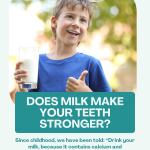


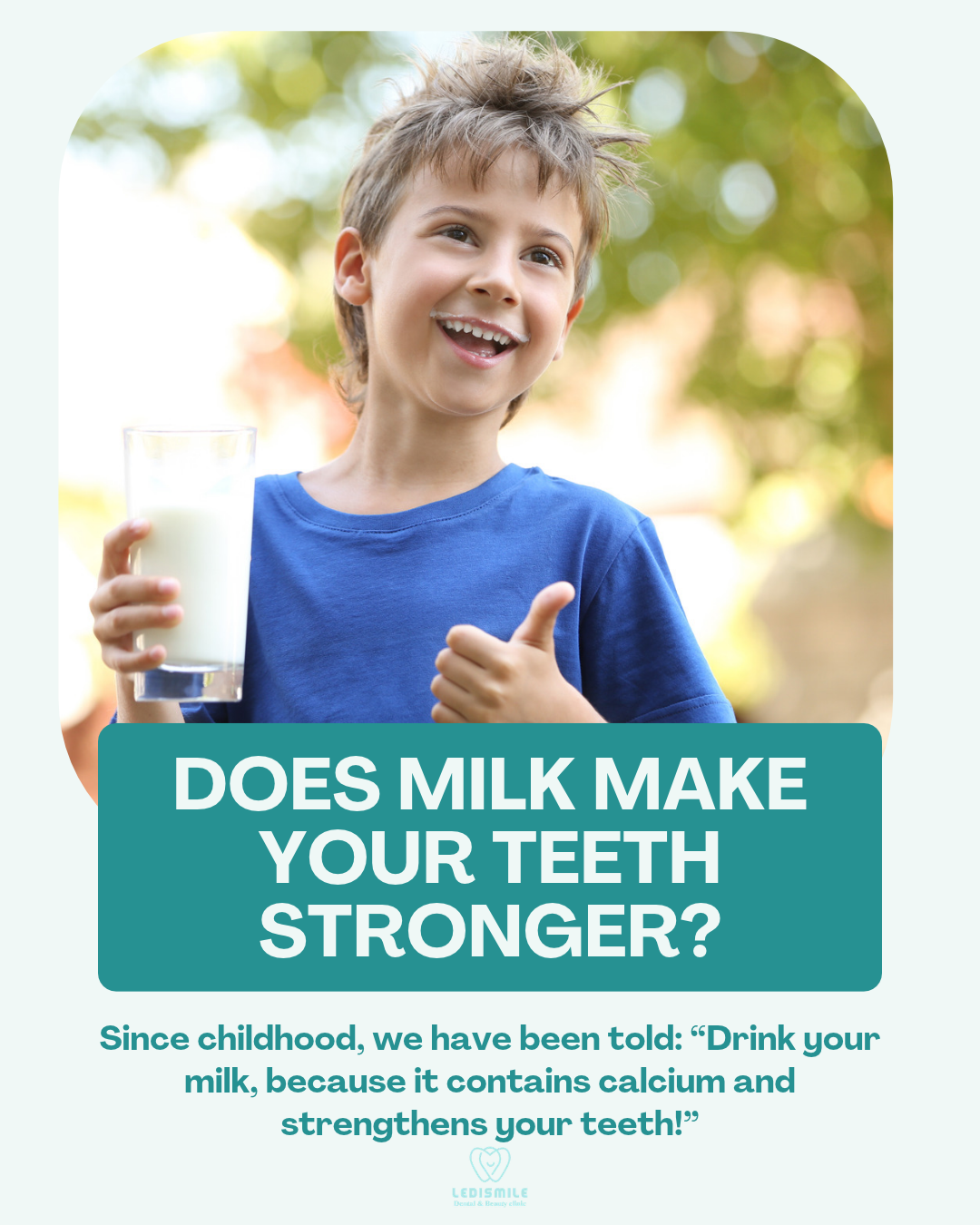
Since childhood, we have been told: “Drink your milk, because it contains calcium and strengthens your teeth!”
But is this entirely true? Does milk really make teeth stronger? Can we have healthy teeth without drinking milk? And are there foods that actually deplete the calcium in our teeth?
Scientific studies reveal something quite interesting: while calcium is essential for teeth, the way it protects them is more complex than what we were taught as children.
If the body does not obtain enough calcium from food, it may mobilize calcium from the bones to maintain the necessary concentration in the bloodstream. Tooth enamel and dentin are largely composed of minerals—specifically hydroxyapatite crystals—which contain calcium and phosphate.
However, there is a fundamental difference between bone and teeth.
Bones are tissues that undergo constant remodeling, whereas the enamel of erupted teeth does not undergo biological remodeling in the same way as bone. This process is known as remineralization, and it serves as one of the most important natural protective mechanisms in the oral cavity.
The milk myth: Does it truly strengthen teeth?
Yes, milk is a good source of calcium, but it is not irreplaceable. Drinking more milk does not automatically translate into healthier bones or teeth.
So, the scientific message is:
Calcium is essential. Milk is one way to get it, but not the only one.